More than 300 claimed sightings during the past 200 years
"A native image that fits Caddy's description has been traditionally used throughout Alaska. The image indicates that Caddy or a Caddy-like creature moves north to Vancouver when the waters warm. The Inuit of Alaska have even put the picture on their canoes to keep the creature away. The Cadborosaurus is called hiyitl'iik by the Manhousat people who live on Sidney Inlet, t'chain-ko in Sechelt mythology, and numkse lee kwala by the Comox band of Vancouver Island."
Name comes from Cadboro Bay in Greater Victoria, British Columbia.
Identification:
Sea serpent
Horse-like head and long neck
"a pair of small elevating front flippers, and either a pair of hind flippers, or a pair of large webbed hind flippers fused to form a large fan-like tail region that provides forward propulsion"
Exclusively aquatic
History
1930: Carcass found on Glacier Island, thought to possibly be a whale.
1933: Editor and journalist Archie H. Wills coined the name "Cadborosaurus"
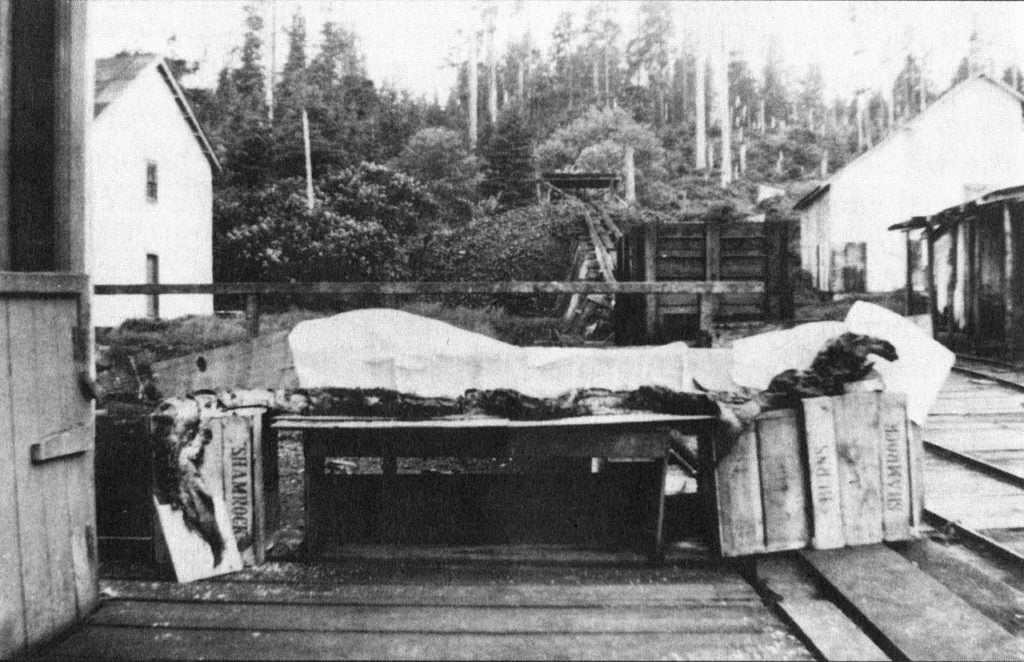
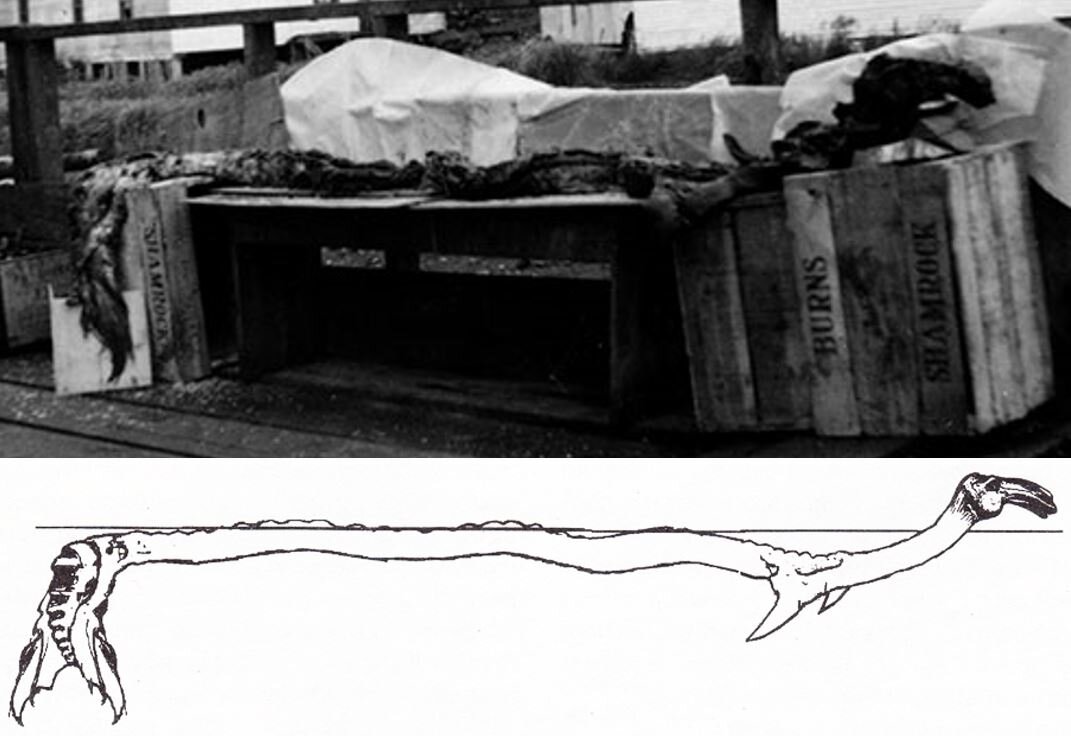
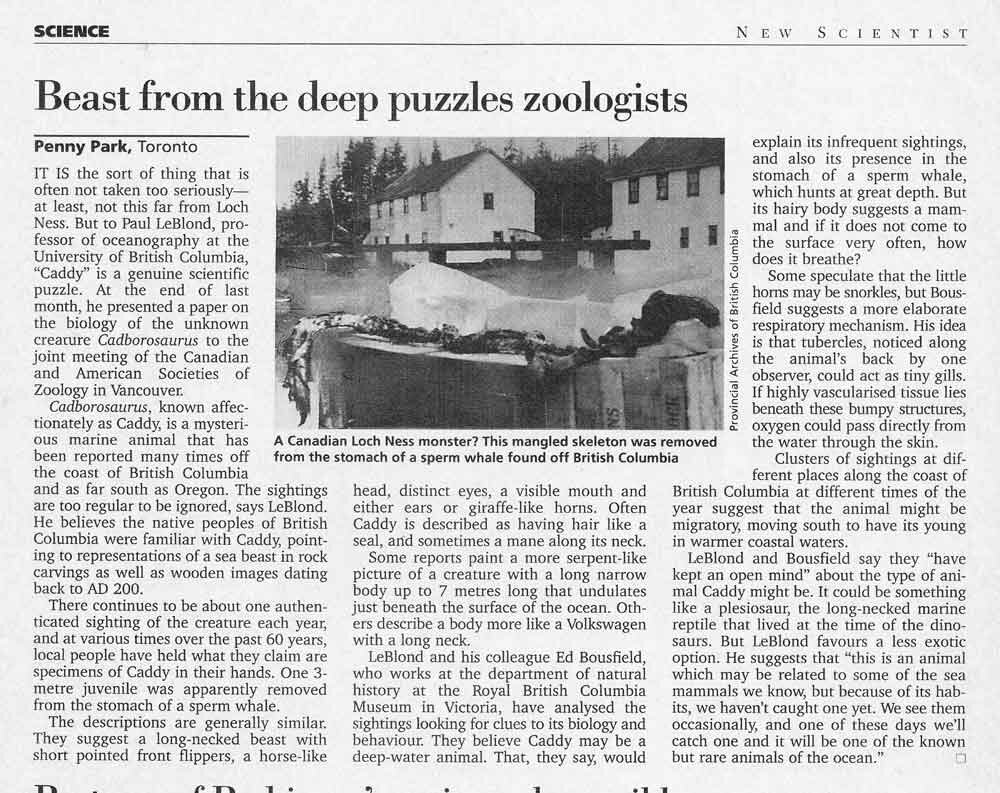
1937: Carcass found in stomach of a sperm whale, thought to possibly be a fetal baleen whale.
1941: Carcass, named "Sarah the sea hag", found on Kitsilano Beach identified as a shark.
1956: 100-foot long carcass found south of Yakutat, Alaska. Some say it did not match the characteristics of any known creature, others claim it was a Baird's beaked whale (which only grow to about 40 feet).
1968: W. Hagelund claimed to catch live baby Caddy, returned to water.
1991: Phyllis Harsh claimed to catch live baby Caddy, returned to water.
Proposed Explanations
Sea lion
Giant oarfish
Basking shark
Images
Carcass extracted from the stomach of a sperm whale.